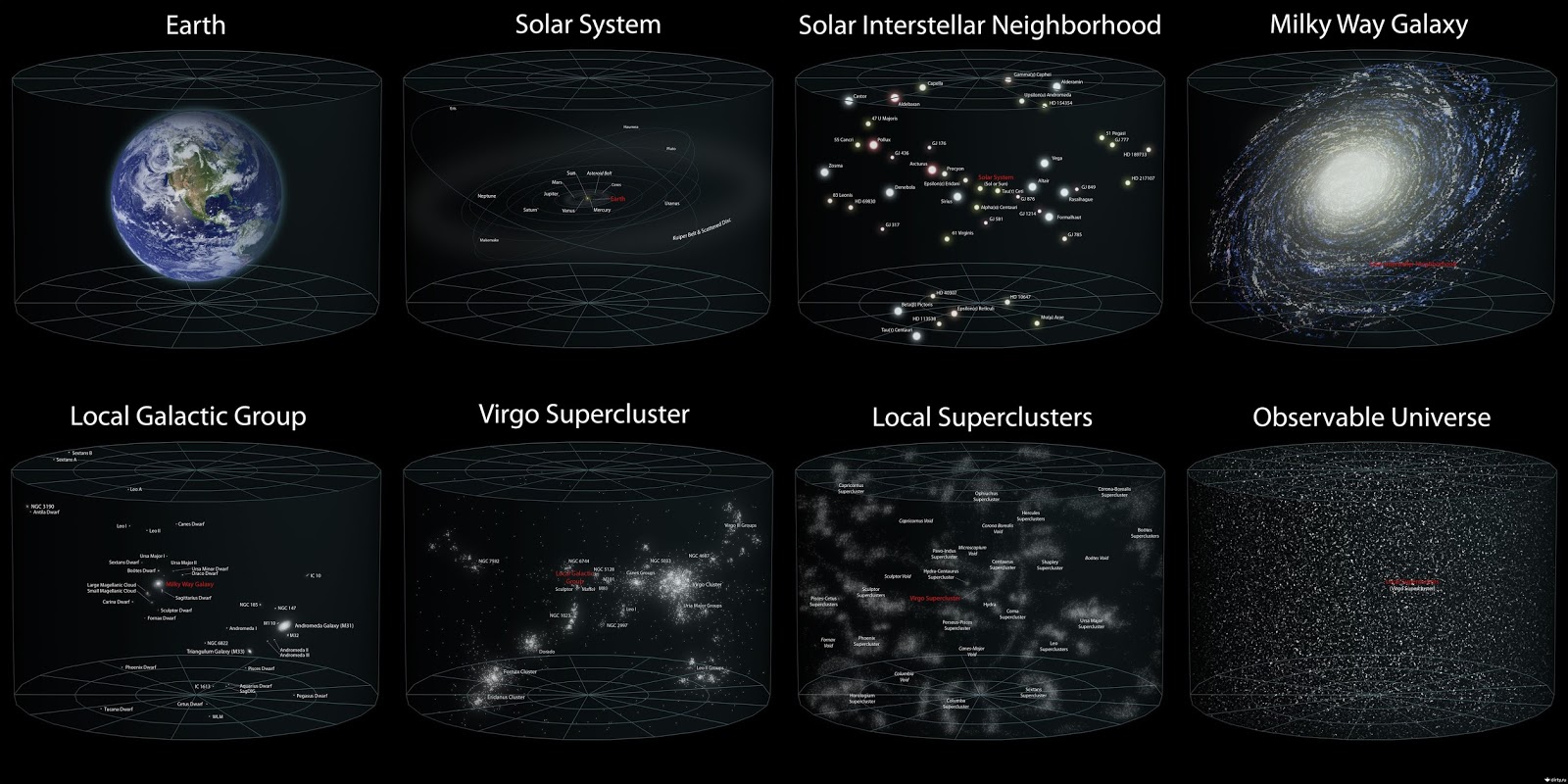
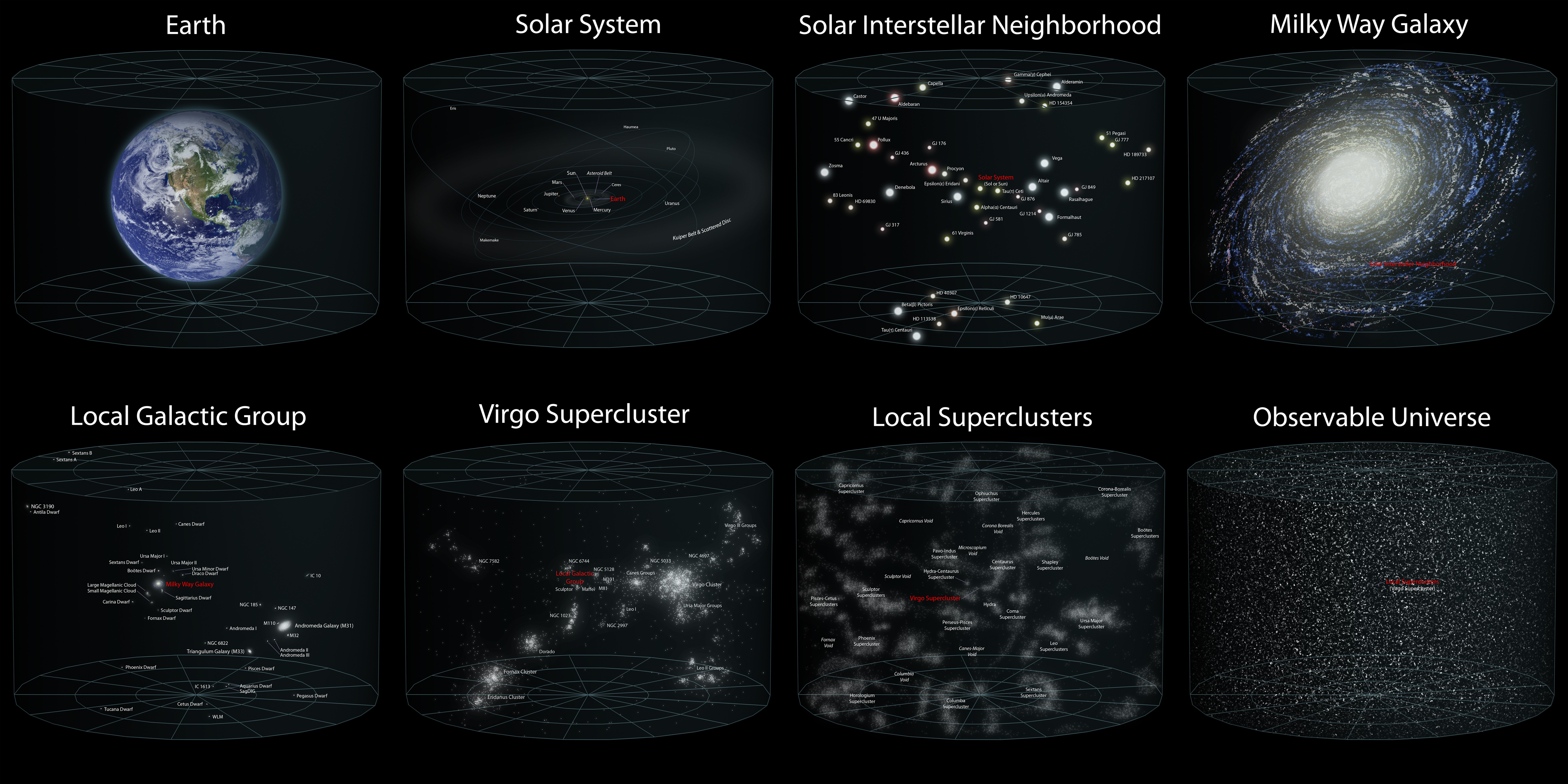
From last week I am in living an ocean of utter creativity of silent
visions. And totally silent even if galaxies are colliding or being
created! There is no way I can describe the visions. I feel I am
dreaming when I am in the waking state. This waking state is not me.
The real me is totally mad and totally creative. I see no violence in
that, thank God. I am experiencing some mad state. I know it is totally
incommunicable, but will try nevertheless.
I know, when the saint of Simhachalam blessed my Guru Svaprakashnanda
rubbing his head and saying "pichi pichi pichi, mad, mad,mad" I used to
wonder what it was. Was it a deeksha or what? Now I understand what it
meant.
There are two states. Being and becoming. Being is what
you are. It is called now. This is continuous. Becoming is creating time
by chaning me.
Becoming is what you are not. It can be sudden or
continuous. It can be anything. Blazing lights, galaxies, stars,
earths, oceans, people, animals, worms.
Smallest to biggest.
That is ever changing. In this state you are seeing yourself as other
than you. This is the creative part.
Whatever you are seeing is
spinning out of your current being, controlled in part by your giving it
an intention, a direction. Another part is spontaneous, not created by you. This is the much bigger part.
Records of all happenings are set in scrolls, mostly in Sanskrit. If
you can access a particular region of gravity, space and time of total
five dimensions, you can retrieve such information. You can see yourself
at different ages, before births into the past. I can read the
Sanskrit. But they are written so fast, and so voluminous, I just cant
remember them. Except a few headings here and there. Some of them change
as I try to read them too.
I am enjoying my madness. That is the
real me. This world, my role in it, gender, caste, name, fame, money,
power, status, goals mean nothing. That goes for Manidveepam as well.
This world, my role in it, gender, caste, name, fame, money,
power, status, goals mean nothing.
I am myself. That is the most important fact. I am also understanding
the futility of asking for the power of making others see what I see. By
the time I get into the others trough my will, the visions have changed
infinitely. And it never repeats. So what is the point?
They will always be my visions, whoever I happen to be.
At least is there a mantra, yantra, tantra or any process which can
give such experiences? No. It is Her choice. By Her I mean the part of
me which becomes what I see through my intention.
Language is so inadequate. When I pray, I am in my dream world, not my real world. So prayer is useless.
Sorry to bother you with my raving and ranting. You are one person with whom I can share my madness.
====================================
Viraja Homam
Viraja Homam is a core and very important component of the Sri Chakra Navavarana Puja. Its significance can be gauged from the following conversation Guruji had with one of his disciples who was plagued with personal problems –
Disciple – “Guruji, there are so many problems in my life that I simply feel down and out. I sometimes wonder if life is even worth living any more. Everyday I have to somehow literally pick myself up to do things. I have no motivation to live whatsoever. What should I do?”
Guruji – “Doing Navavarana Puja can be very helpful. It will help rejuvenate you physically, mentally and astrally.”
Disciple – “Guruji, I don’t have the energy or the will to sit down for 2 hours to do an elaborate puja. I am finding it difficult to even survive!”
Guruji – “I understand. I recommend you do the Viraja Homam daily. It is the single most important part of the Navavarana Puja. It will help you to reconnect with Devi both inside and outside. It will re-energize your astral body immensely. By daily practice of the Viraja Homam, you will let go of your physical and mental maladies, and fill yourself at all levels by the Amritam or divine nectar. This state of divinity is always within us but our limited vision prevents us from experiencing it. Viraja Homam removes these limitations by an internal sacrifice where we witness the transmutation of our limited self into the unassailable peace of the divine Self. You will be a floating bubble of peace unaffected by the turbulence of life. My blessings are with you.”
F: Let me ask you a question, for a change. Where was this world before you were born?
S: I dont know.
F: Where will it be after you die?
S: ditto.
F: Ok. Could it be that the world you see exists only in your mind?
S: Possible.
F: Then you are its creator because it exists only in your mind?
S: Possible. But...
F: But what?
S: I am so small, the world is so big...
F: Now, now. Haven't we agreed that small and big are illusions?
S: May be, but they are are real to me.
F: Why?
S: If I am the creator, the world should obey me. But it does not. I feel powerless to control it.
F: Mom and I created you. Do you listen to us and obey?
S: Why should I obey you?
F: Then why should the world you created obey you?
S: But I have a separate life of my own.
F: Exactly. The world you created does not obey you, because it has a life of its own.
S: You are tricking me with words.
F: Yes I am.
S: Give me an experience of being the whole world.
F: I cant give you that experience, but I can tell you how to get one.
S: Fair enough.
F: This is going to be a little long. You have patience to listen now?
S: Willing.
F: You are familiar with three states of you being: awake, dreaming and sleep. When awake, you can know and act. Time is flowing continuously. When dreaming, you know but cant act. Time is going in jumps. When asleep, you cant know, cant act. Time also sleeps. Time is like space. Life is its property, like energy-matter. Time arranges things. Things without life moves things to disorder, bad acts. Things with life move towards order, good acts. Time moves forward, towards more disorder. Life makes time move backward, to more order. Are you with me still?
S: Sure.
F: Good. Time is father, Life is mother.
Time is Siva, Life is Power, Shakti. OK?
S: May be. (Starts yawning).
F: Understand Shakti to go to the source, the state of perfect order when there is only one thing;
you may call it Shivashakti. What is in a name? You could call it Siva, you could call it Shakti;
both are same.
S: What does all this have to do with my experiencing my bigger self?
F: I am coming to that. I told you about awake, dreaming and sleeping right?
S: Yes, may be.
F: But I did not tell you about waking dream, and waking sleep did I?
S: No.
F: Waking dream is when you are manifesting an imaginary world. Because you are awake, you
have control over your dream, you can redirect it the way you want. Lucid dreaming manifests.
Waking sleep has two parts.
1.Thinking in words (memory or mind) is absent, feeling body movements is present. This is
called yoga.
2. The other part is when both words and feelings are absent, but consciousness alone is. This
is the pure witness state. This is called Samadhi.
S: Can you please summarise all this?
F: Sure. The way to Samadhi consists of three steps.
1. Yoga Nidra (conscious dream, astral interactions)
2. Nata Nidra ( conscious feeling, dyamic meditation of Nataraja)
3. Samadhi (pure consciousness when no object is visible, antarmukha witness)
S: Good. But why is the pure consciousness state important?
F: Because you are the witness of your self. Ask the question: who is your witness? The answer is, the world. So, when you are the world, you are identifying with the world.
S: I am the creator state?
F: Yes. Then it is true to say that. Then the world obeys you, because you are everywhere, at all times, and in all energies ( including matter). Because you exist at all times, you become deathless.
S: So, when the world does not obey me, I am saying that I am different from the world, separated from it, and the world obeys me, agreeing with me that it is separate. What does all this have to do with Sri Chakra?
F: I have been talking about the first three enclosures, the square-waking awareness, 16petals-dreaming imagining awarenss, 8 petals-sleeping unconsciuosness. The inner circle has to be approached through putting thinking mind to sleep, and feeling mind to sleep, putting both to sleep, just abiding in a pure consciousness. Then you enter the world state, and then the energies making this world, the trinity and beyond. All this is Sri Chakra.
S: Is there some course on achieving "I am creator" state of Samadhi?
F: Sure. Pray to Shakti to reveal Her secrets and be your comanion-mentor-guide-guru. She will surely help you. If your compassionate mother doesn't help you, who will?
S: What about science?
F: All science is Mother, Saraswati. She can teach you. Love and Nature are also your Mothers. They can also mentor you. Shiva dances because Shakti gives him life.
S: One final question. If I choose to be good, will you help me?
F: What more can I ask for?
May Shiva and Shakti dance in the atirudra yagam conducted in a grand style by S.
Visakhapatnam, 6 Mar 2010
==============
Beneath an article of Guruji I want to add words of Kamalakara Mishra, that candeepen theunderstanding of the words of Guruji:
Moksha, or mukti, has two meanings — a negative meaning and a
positive one. The negative meaning of moksa is the freedom from impurity
(ajñāna or māyā).
This is suggested by the literal meaning of the word mukti. The word
mukti, or moksa, literally means “release,” “freeing,” or “unbinding.”
As we have already seen, the soul is in bondage — the bondage of
ignorance, or māyā — that obstructs the real nature of the soul. Moksa
is the release or freedom from the bondage of ignorance. The soul is
bound by limitations and moksa is freedom from limitations. It is not
that one becomes free from some limitations for some time under some
conditions; one becomes free from all limitations for all time under all
conditions. [tasmānmukto’ pyavacchedādavacchedāntarasthiteh/ amukta eva, muktastu sarvāvacchedavarjitah// Tantraloka 1.34] Moksa is not relative freedom but absolute freedom.
Since
moksa is understood as release from something — ignorance or impurity —
it follows that moksa is a negative attainment. We lose something in
moksa, but what do we gain? We gain our own real nature that was
hitherto obstructed. [mokso hi nāma naivānyah svarūpaprathanam hi sah. - Moksa or liberation is nothing else but the awareness of one's true nature. Tantraloka 1.156]
When
we clean a piece of cloth, cleaning is certainly a negative process —
we separate the dirt from the cloth and we do not add anything to the
cloth. But the negative process of cleaning leads to the positive
attainment of the real nature of the cloth, which is clean in and of
itself. We do not add cleanliness to the cloth. The cloth is clean by
its very nature; that clean nature was only obstructed. Now that the
dirt is removed, the cleanliness of the cloth comes to the fore. Or, to
use another analogy, when a lion is released from captivity, it is not
true that when it was in the bound state it was a goat and only when it
is freed does it become a lion. The lion was already a lion, but its
“lionness” was not in evidence as it was caged. Once it is freed from
the cage, it becomes what it already really was.
Similarly,
in moksa we become what we really are. Our real nature was obscured and
now that the obstruction is cleared away, we attain our real nature.
Moksa is thus also a positive attainment — the attainment of our real
nature. Of course, this is not the attainment of a new thing; it is the “getting of the gotten’’ (prāptasya prāptih). [apravarititapūrvo’ tra kevalam mūdhatāvaśāt, śaktiprakāśaneśādivyavahārah pravartyate.
Iswara Pratyabhijna Karika 2.3.17] This paradoxical statement is not a tautology; it means
that the Self that we attain in moksa is already there; it is not a new
thing. In this sense moksa is the “getting of the gotten.’’ But the
Self was previously obscured, and we have come to realize it only now;
in this sense it is a new event. The Self, or Consciousness, was very
much present, but its powers were blunted, just as in the case of a lion
in a cage. So it is only when Consciousness is released from captivity
that its powers are revealed, just as the powers of the lion come to the
fore only when it comes out of the cage. The thing that is attained is
thus already there, but the attainment itself is a new thing.
All the systems of Indian philosophy that accept moksa accept both the negative and positive meanings of moksa, namely
(a) moksa is freedom from bondage and
(b) moksa is the attainment of one’s own real nature.
All
the systems are thus in agreement with regard to the meaning of moksa
as the attainment of the real nature of the soul or self. But what is
the real nature of the self or soul? It is here that the differences
among the systems of philosophy start. The conception of moksa in a
particular system depends upon the conception of the real nature of the
soul accepted in that system. We find in the systems of Indian
philosophy a hierarchical understanding of the real nature of the soul.
In Vaiśesika,
the nature of the soul is only existence (sat); the soul exists but it
has no knowledge, no activity, no pleasure, no pain. These are the
accidental qualities of the soul. They naturally disappear in the state
of moksa, as they are not part and parcel of the soul. In the state of
moksa, as conceived by Vaiśesika, one virtually becomes like a stone, as
one is devoid even of knowledge. The moksa of Vaiśesika is viewed by
the other systems as a disvalue, and is also ridiculed by some of them. A
Vaisnava bhakta, for example, says, “I would rather forego moksa, and
accept being bom as a jackal in the forest of Vrindāvana (hallowed by
the presense of Krsna) than pray for the mukti of Vaiśesika.
- varaṁ vṛndāvane ramye śṛgālatvaṁ vṛṇomy aham | vaiśeṣikokta-mokṣāt tu sukha-leśa-vivarjitāt ||
In Sāmkhya,
however, we find an improvement upon the Vaiśesika position with regard
to moksa. According to Sāmkhya, the nature of the soul (purusa) is both
sat (being) and cit (knowledge), and thus the state of moksa is a state
of knowledge. But here, too, the soul is devoid of joy (sukba or
ānanda) and activity, as these are the qualities of matter (prakrti). In
moksa (or kaivalya, as it is called in Sāmkhya) the soul (purusa)
remains a seer or knower and not a doer; it is also devoid of bliss, as
bliss goes with prakrti, from which the purusa is completely dissociated
in moksa.
Vedānta moves a step further and
declares that the real nature of the self (soul or purusa) is not only
sat (“existence”) and cit (“knowledge” or “illumination”), but also
ānanda (“joy” or “bliss”). Brahman, which is the real nature of the
self, is sat-cit-ānanda.
This idea is fully developed in Advaita Vedānta. According to Advaita
Vedānta, one becomes sat-cit-ānanda in the state of mukti. But there,
too, as in Sāmkhya, the liberated soul remains inactive (niskriyā).
There is no activity in the real nature of the Self, activity being
relegated to māyā, which is transcended in moksa.
Kashmiri Tantra [and hence Sri Vidya] , as we have seen, accepts as the nature of the Self not only sat-cit-ānanda but also activity (kriyā, vimarśa, spanda, śakti, or svātantrya).
This is spontaneous activity freely arising out of the fullness of the
Self. Since freedom or activity (svātantrya) is the very nature of the
Self, the liberated person is vibrant with joyful activity.
Bondage
is a state of the forgetfulness of our real nature. This forgetfulness
did not begin at a particular point in time; it is beginninglessly
present with the existence of the individual soul, as if the soul were
bom blind. Since bondage is the forgetfulness of our real nature, moksa,
naturally, is the state of remembrance of the same. Abhinavagupta says,
“The enlightenment (prakāśa) that dawns in the state of moksa is
like the remembering of a forgotten wealth, and the forgotten wealth is
the state of one’s unity with all.” [sarvādvaitapadasya vismrtanidheh prāptih prakāśodayah. ANUTTARASTIKĀ 4.]
In
the same vein it can be said that the joy (ānanda) that we obtain in
moksa is the natural joy of the Self, which we realize by easing
ourselves from the crushing load of ignorance we are carrying.
Abhinavagupta further says, “The joy of moksa is not like the acquired pleasure of material wealth, women, and wine; [ānando na hi vittamadyamadavan naivāñganāsañgavat.
IBID. ] the joy of moksa is the joy of the freedom from the colossal
sense of duality, like the joy of the unloading of a heavy weight.” [harṣaḥ saṁbhṛtabhedamuktisukhabhūr bhārāvatāropamaḥ. IBID.]
From the above treatment of moksa, two things become clear:
(a) moksa is not a physical acquisition but a realization, a remembrance, or a re-apprehension of the Self; and
(b)
moksa is not a new acquisition; what we attain in moksa is already
there — it is only a question of uncovering or discovering it. [ tadapararanameva hiparameśvaratālābho muktih - Iswara Pratyabhijna Vimarshini 2.3.17]
1. My body is a temple. All parts of my body are made by Goddess and are divine. They are seats of all powers: manifest and latent. They are the real Sakti Peethas.
2. Sex is sacred. It is the source of life. Genitals are sacred. I worship them as Siva and Sakti.
3. Sri Chakra is located in all the female genitals at the clitoris. It has been called the Jewel in the Lotus. It is most sacred, and secret, yet known to everyone. I worship the Sri Chakra, a circle of devotees to connect me to the source of cosmos.
4. Whatever whatever sins I committed, I did in a state of ignorance. Then I was in a hypnosis. Now I am awake. This awakened being did not commit those things. I do not feel shame, nor will I punish myself for what I was. Past is past, gone for ever. I forgive myself, as I forgive all others the wrongs they did tome. Now I can laugh at my mistakes, and others ignorance. Is a five year old less than a ten year old? All are evolving. I don’t have to hate ignorance. Darkness cant be where light is.
5. I love myself. I deserve love. I deserve riches. I deserve joy, happiness, health. I have them. I share them. I will see people’s happiness.
6. I will think of Goddess always. In my sadness, in my pleasure. More so in my pleasure, because that is when I tend to forget Her.
7. My mother, father, guru, guests, relatives and friends, and all help me; I express my gratitude for their help every day mentally and through actions. I will serve them with compassion.
8. Even my enemies have life; and life is Devi. So I respect them, forgive them, and try to look at their point of view and make friends. If I can’t do it, I will love them all the same, do not reject them, but maintain a respectful distance. My love does not expect that they should love me in return. It has no conditions attached. I share because I like sharing. That is all.
9. Expressing love through thought word and deed are the sure means for unlimited abundance, health, and pleasure. It is my birth right to enjoy these good things of life.
10. In every outgoing breath, my anxieties and worries are getting out. With every incoming breath, peace is coming in. I am happy here and now. I have plenty of energy flowing through me. I am enjoying bliss, energy, wealth, love and pleasure independent of external circumstances.
Mark those that appeal to you. Repeat them every day and make them your own. You will see your life change in perceptible ways.
Guruji sits atop Sivalaya’s hill as the frame of the Sri Meru temple rises below; the Ashram and water tower are visible at far left.
My dear all,
Here is why I exist, and what my dreams are.
“There are two kinds of laws: those made by us and those made by Nature. As long as our laws match those of Nature, She will give us wisdom, bounty, and creative purpose to our lives. When abused and raped, She turns violent.
I believe in the power of Nature as a loving Goddess. I have seen Her physically manifest once. She has been my mentor through decades of meditations. I could only wonder at Her impossibly perfect and dynamic beauty, passion for love, and bounty of creativity. She made me build a temple for love (Rati), Kāmākhyā, in the form of Her creative center. And another unique temple in the form of Her bosom, called Śrī Meru, for protecting and nourishing humanity. She has shown and taught me great ancient erotic practices cutting across the world’s Goddess cults which emphasize love over manipulation. Now She is asking me to build an international temple not confined by walls, as a layer on the internet.
She can be approached through many good deeds done in past lives, or by Her grace flowing through a wise Guru. She made me create graphic learning modules for connecting to Her. She made me use technology as a means of initiation or immersion, and to accelerate the learning curve. Her purpose is to promote quality of life.
What is my purpose? I believe that however small I am in the vastness of this world, yet there is a purpose and goal for my life. I made every effort to discover it and live by the truths I learned.
If you are like me, perhaps you would do the same. Your purpose and dreams may be different from mine, but all of them spring from the same fountain of care and love. Everyone preaches love. It is high time we start walking the talk. We owe it to our future generations.
What are my dreams?
I dream of Devīpuram as a center for incubating dreams of a holy pilgrimage from birth to rebirth. I firmly believe that love comes from wisdom to overcome greed.
I dream of the days when everyone can get pure water to drink. It can come from air even in a desert, with little help from the Sun.
I dream when all people live in comfortable homes using solar cooling and heating.
I dream of the poor getting a light to study after the Sun has set.
I dream of not destroying the greenery on Earth and saving oxygen which sustains life.
I dream of the days when all of us can hug each other with love and see the divine spark in all of us.
I dream of a generous world where the haves support the have-nots.
Are these empty pipe dreams? Let us probe a little.
Guruji at Devipuram, 2007
Internet technology for teaching being natural, and its values through mobiles. Power of mantra goes through voice; it can be an audio file. Convergence of audio, document, and video are being used to flip classes in distant education, where coursework is done at home instead of a classroom and problem-solving is done through conferencing. Mobiles go wherever you go. Learning happens at a place and time of your choice (even while driving to work), and at a speed comfortable to learn. Love can and should transcend boundaries of country, color, and creed.
I ask: if threats to nations could be delivered through a video, why not care and love be delivered through it?
Instead of chastising China for dumping excellent but cheap solar panels to compete with grid, we can thank it for making its human resources available to solve power problems of the world. Solar is green tech, preserves ecology for our descendants. It can provide clean water, comfort, and power to increase time available for learning. And it moves capacity to dream and execute them from urban to rural areas, providing a level playing ground for big and small enterprises alike.
I am trying to find out if you have similar dreams.
Can’t breathe ; Birth process.
Some unkind force cut my breath.
I cry. Fluid gushed out.
I take my first breath.
An inspiration! My second pleasure!
Again I felt empty and sought eagerly for I don’t know what.
Something poked into mouth. I sucked. Nectar poured into me
from my mother. And milk, the juice of life. I was never so happy.
I felt; I could drink milk for ever.
Alas, that was not to be. Milk ran out. Sucked and sucked, no juice came out.
I get angry; I bit. Mother beat me. She would feed me something I don’t like.
Then she cuddles me, which I like, and tells me stories, I like them more than food.
Slowly, I began to like that food too.
Slowly I understand that I and my mother are not one anymore.
I recognize my father, but not as myself.
Now, more misery than happiness.
I thought: I have three mothers and a father.
The mother that gave birth to me,
that fed me,
that told stories and sang for me.
I liked my father. He gives me presents, and takes me for rides.
Mother always works.
I don’t like my father to shout at Her, or Her crying.
I tell her, it will be alright.
A day will come when he won’t be angry with you for each and everything.
A day will come when misery ends for everyone.
When father and mother are one again.
I did not know how it will happen, but I know it will.
Then I grow big. And years pass.
Learning. Few times getting what I want.
Then I was asking, why did I want it?
Many times not getting what I wanted.
At such times I asked; why was I born?
To suffer misery all the time?
Why are the bad people happy and good ones unhappy?
Is there a God?
How could abundant Nature be so cruel too?
I never got the right answers.
Until I met Her.
She wore male clothes. But was female inside, alright. She was called Venkaṭī Īśvara, meaning She was the Lord in the olden days. Now She is called Bālājī, or Venkateśvara.
What a thrill went through my body when I met Her! I longed for Her. She did not fail me. She came to me. And taught me many things. Like how to read new books with closed eyes. How to walk on rainbows. Like how to make lotuses bloom and put fragrance.
She kept company with me for twelve years. She told me, you see, we are all one. Pleasure is sacred. Cruelty is sin. I don't understand why cruelty can be shown publicly in media, but not pleasurable sex which is sacred. I don't like cruelty. I love life. I like you all to enjoy life openly. Yes, this is what She told me in so many beautiful ways.
I forgot to tell you. She also told me She is ready to teach all who open up to Her.
A life of enjoyment. Life is enjoyment, a commitment to joy. Life is a holiday. To make the holiday more enjoyable, you work sometimes. Why hide your joy and wear the masks of misery? Except you humans, the whole of life is enjoying openly.
Work is also pleasure. Pleasure of receiving, and pleasure of giving. Entertainment is an industry too. Love is the child of pleasure. The God of love is the son of pleasure.
I closed my eyes and saw. It was true. The kingdom of Goddess is inside me. I made an offering of thanks to Her. I built a temple for Goddesses as She directed me. Thousands will remove their masks every day and enjoy fun. There is a place for fun as in the golden days of tantric Khajurāho.
I did my job. I thought there was more to do. But She put the doubt in me. Do you have to do it? Give somebody else a chance.
I am waiting for you. People will never leave you in peace. Die to the world, so that you don't have to do anything anymore. You be with me always. Because I love you.
Let them worship you as me. Does it make a difference by what name you are called? God of the Seven Hills or Goddess of the Seven Seas? Is there a high and low, up and down, left and right, life and death? Only the dream play of time.
Wake up, from waking state! Enter me, I can't wait any longer.
I close my eyes. So I can be with Her always. Do nothing. This is the point of no return. It is a one-way street. I forgot how to talk or sign. Will someone do it for me, please?
“Listen!” Kāmākhyā said, “Here I am residing with Ānanda Bhairava (Śiva in his happy mood). As I am happy, I want to bless the devotees with the same happiness!
So many centuries ago there were celebrations and happy rejoicing in this place of worship (Devīpuram) with yajñas, Vedic chant, and many offerings in the fire. This place was invigorating to the people who visited here. It gave devotees religious fervor and filled their minds with total and supreme blissful Consciousness (cid-ānanda-paripūrṇa-prakāśam).
This place once again needs to be made into a place of religious worship, and it is you who will help me to do it! You have to carry the task of rediscovering this place!
The social scene is highly polluted now. Many have become slaves of materialism which turns away from Self-realization. They are like the Creator who fell in love with His own creation.
The act of union in love, as the root of Creation, has become ridiculed into lust and egoistic passion, since the divinity of Love is lost in the temporary act of satisfying momentary egoistic needs (indriya prakopam). Therefore atheists sneer when śṛṅgāra (loving for love’s sake) is mentioned anywhere.
All these misconceptions, greed, and falsehood are making life miserable. Because of such behavior people lose peace and hence cannot find happiness. This so-called ‘right social behavior’ is actually causing unease and misery.
All this should change!
Before these arrogant people degrade even further, they must be taught or reminded of the easy, comfortable, genuine way of life — so that they can become happy and have enough time to think beyond egoistical concerns. Reach out to those who are fortunate enough to help themselves!
The institution of marriage can be taken as an example. People, through generations and time immemorial, believed in marriage with a different understanding. Ancient marriages of love sanctified religious duties. Now marriages have become mere acts of egoistical convenience and gain.
Hence one should not impose bondage on the couple. In ancient times it was a way of life. Now it has become a loveless contract.
It is time for people to understand the beauty and comfort of co-existence, to bring children who are happy, well-behaved, self-satisfied, and altruistic. This is the need of modern time.
Śṛṅgāra is nothing but preparation or getting ready for union in love, also decorating oneself in the most beautiful and appealing way (what the present generation calls “makeup”).
In ancient times Love was one of the sixty-four arts of life (catuḥṣaṣṭi kalās) that one should know for successful and happy living. Nowadays the word is translated as lust, which demeans this art to its lowest degree.
Śṛṅgāra is known in ancient literature as Kāmakalā. It resides in the Mūlādhāra Cakra, coming down via Suṣumṇā Nāḍī as a Vaikharī Śabda. Through it a person is identified with Earth. This type of planned creation and its execution is beautiful and ecstatic.
In the human body Mūlādhāra is the seat of creation. From the Supreme Void, Supreme Consciousness identifies itself as Sun and Moon energy and also Fire energy and enters the human body through Suṣumṇā.
Mūlādhāra works through the South Pole on Earth, and in the solar system through Saturn. Mūlādhāra is a four-petaled lotus where each petal represents one Veda or one side of Earth.
Here, on Earth, in its bīja (seminal) form rides an elephant holding an infant in Her lap. This infant is none other than Lord Śiva Himself. Therefore we are called “Bāṭukas.”
The elephant is Airāvata. Airāvata is the vāhana of Indra, which means “lightning.” When two heavy clouds rub, lightning is generated. This represents inherent electrical discharge — the imminent seed of Earth.
Mūlādhāra is also the seat of Svayambhū in Liṅga rūpa (self-created phallus). It has the red form. This is the subliminal aura manifesting from homogeneous Consciousness (Parā Śakti). It is static energy of Lord Īśvara — self-created, yet creating everything. This is the truth of life and also the duality of creation.
At Kāmākhyā (Devīpuram) the Goddess appeared like this: a water hole six feet deep with Śivaliṅga, surrounded by a triangle. This confirms it as a representation of the Mūlādhāra center.
Here Devī appeared as Universal Creation, Universal Mother (Yoni), Universal Father (Liṅga), the seat of all creation (Viśva Yoni).
Hence there is no place for lust here. Only controlled divine behavior exists.
Śṛṅgāra control in love-play is something common people may not understand. It seems an oxymoron, but it was traditional behavior of Ṛṣis.
When this happens, materialistic approach disappears. Love is expressed and experienced in a controlled manner. Control means more energy.
Energy in Mūlādhāra travels upward through Suṣumṇā toward Viśuddhi Cakra, transforming into positive kinetic energy, then further toward Sahasrāra where it becomes light energy, manifesting as halo or aura.
Viśukra and Viśaṅga are commanders of Bhaṇḍāsura, representing roots of sin. Viśukra misleads sexuality toward prostitution and lust. Viśaṅga supports this.
Vārāhī destroys them by controlling sexual energy and directing it toward Viśuddhi and Sahasrāra. Conserved śukra (semen) energy evolves to higher levels.
Humanity is in need of direction. They need a leader to lead them to the righteous path.
I am here with this explicit purpose.
I need a tool to fulfill this job.
You are the tool.
I will be with you.
Society will ridicule you, disbelieve you, criticize you, your methods, and even the concept. They may get angry, try to punish you, put you behind bars, or even try to kill you.
Why are you afraid? You are already encaged by buddhi, ahaṅkāra, and ego.
Are you afraid of death? This is not your first birth nor your last. One more death — how does it matter?
Be brave and enterprising.
Take the job and be my tool.
I will lead you.
Come with me!
We shall work together.
This place will soon become a religious citadel which will protect and improve the spiritual and mental health of people.
I experienced many things: I saw 10–20 of my previous lives; expansion of time — during one night I lived a whole life... various things like that. But it is much better for you to have your own experience.
You need to have a Guru who can help you to cope with difficulties. Fortunately, in my case it happened that it was a Guru inside me, so I didn’t need to go anywhere. And I wish to communicate with you in a way in which you can get connected to your inner Guru. That will be the most appropriate thing I can do for you: not to give you an Experience directly, but the means to get this experience is what is the subject of discussion.
Ritual is one way, meditation is another way, yoga is another, tantra is another... there are so many ways and you have to choose the right path. When the time is right, Guru comes to you. And Guru is inside of you — your own effort is your Guru.
What I am trying to say is: don’t accept blindly what others say (including myself). Depend on yourself. Your experience is ultimate.
Make efforts to eliminate your bondage; God will come Himself and remove them all. To get everything, Guru’s grace is necessary, followed by your untiring effort. How to gain grace? Grace will be proportional to effort on sādhana.
First time in Devīpuram, when Guruji was blessed by the Goddess, She appeared to him as a sixteen-year-old beautiful maiden. He was dumbfounded and stood transfixed. She smiled at him and beckoned him to do the necessary pūjā to the guest of honour, Herself.
“There is nothing here! No drop of water! What can I offer you?!” — he questioned Her. As he was completing his sentence there was a sudden cloudburst! With that water he offered Her Arghyam (water to drink), Pādyam (water to wash Her feet), and did the pūjā. She was pleased! He was satisfied and choked with happiness.
The grace and Her aura filled the Universe. The beauty of Her smile and Her attire is beyond imagination of the common human mind. It was so bright... it felt as if the Universe draws its light from the radiance emanated. She accepted Guruji’s offerings and took his hand in Her hand. The rain continued. They walked together in the rain. Goddess was leading, while Guruji was in a trance. Jīvātma and Paramātma together — they came down the hillock and moved towards the future Śrī Meru temple.
Just like one who is walking in sleep, not knowing where and how, Guruji walked with Her. He had no identity of his own. He became one with Her! He is Her! She is him! He is insignificant, minuscule, in the hands of the Great Power that is the Supreme Leader — taking him into the luminescent worlds one by one.
He was praying to Her:
“Please! I would like to be with you! A part of you! One with you! The happiness of this blissful state is all I want! Nothing else would be important to me anymore. Your love! Your tenderness! Your kindness! They are drenching me in a torrent of Amṛta. This is what I want! How can you be so benevolent to me?! This is beyond everything I expected! This is what I live for! For without life I cannot experience this. This experience I want to relish for many lives of my future! Please Mother! Let me!”
His physical being became nonexistent. His mind and soul were dancing with inexplicable joy! He was conversing with Her. They reached the Śrī Meru temple site. There, as he observed in his transcendental state of happiness, She left him slowly, gradually, and silently as he was standing there in awe. She is like a lightning, enlightening everything around, and then disappeared. She has gone! But the experience lived with him.
Transferring power to imagine, nourish, and manifest an environment which supports your vision is initiation. It happens by making you understand your true potential. There is no higher purpose than to know the sleeping powers you have and that you can reinvent your destiny by tuning into the universal mind. The transmitter of such powers is the Guru; the receiver is the disciple.
Dissolve matter into spirit is the theme song of Śrīvidyā. It starts explaining concepts of solidity and shape, the identity = ego we are taught to assume. It proceeds in seven steps:
Solid
Liquid
Fire
Air
Space
Time
Unknown
The first step, moving from solid to liquid, meaning shape to shapelessness, is described as Gaṇapati in the tradition of Śrīvidyā. The ritual makes a paste of impurities connected to the idea of my body. With mantra repetition, spoon after spoon of perfumed water is poured over a pyramid, a symbol of spirit encased in a body. Your actions dissolve the pyramid, and you experience flowing out of your body, an ecstasy. Along with the body, the individual consciousness dissolves into collective consciousness.
Let me explain. Let us suppose that we place four pyramids in a big plate, and four of us do this ritual together. Initially each pyramid (each of us) contains its own awareness. As the pyramids dissolve, the awarenesses leak out and in the end, they all become one.
What have we achieved? Four separate persons have become one single person. The idea of this person contains all the ideas of all of us. So you know the thoughts of the remaining three of us as your own thoughts. We don’t have to tell them to you.
The first step in Śrīvidyā is giving the mantra of Gaṇapati. Why? To enlarge your ideas of who you are. To let the people you know support your ideas, and you support theirs. If n people become one, the power each one has is n(n−1). If ten persons become one, each of them gets ninety times more power than they have now. The power increases exponentially. The happiness increases similarly. Ease of solving problems increases similarly. Problems which loomed large become trivial now.
The key is to tune into collective consciousness, to be able to read the mind of Goddess Nature. The ideas rising in the collective are not exactly the same as the ideas in fragmented minds. So there is no risk of wanting the wrong thing.
If we want to transform a world having 5000 million people, we need only the square root of that number of people. What is it? Square root of 5000 is 70, and that of a million is a thousand. So 70,000 people can decide to change the world and own the power to do it. Together we can change the society. Individually I have very little influence.
Śrīvidyā is understanding how this world came to be, and my role in it. It proves step by step that there is a collective consciousness like an ocean in which we swim like fishes, breathing in the waters of life. It also helps in understanding how a little drop can contain an ocean of which it is but a small part.
Is it important to learn it?
Śrīvidyā lets you feel the unbelievable wonder of your identity with Brahmā. Brahmā creates all our worlds with the help of Sarasvatī. She is the explosive flow of information. Brahmā is gravity which binds energy to a form. Information which can’t be bound by gravity is Sarasvatī. These are the two fields manifesting life: gravity and waves of presence, called information.
Śrīvidyā is derived from Strīvidyā (notice the extra “t”?), which means adoring nature consisting of the syllables:
s for sattva,
t for tamas,
r for rajas,
and i for desire.
Sattva means knowing, information.
Tamas means the ideas of who I am and who are my family members; in short, I and mine, which are limiting bondages.
Rajas means escaping binding, going out of boundaries of I and mine.
Desire doesn’t choose. It likes binding, gets bored of it and then likes freedom; it gets bored of it too. It keeps oscillating between sympathy and apathy.
If “t” for tamas is removed from Strī, it becomes Śrī, the wealth and pleasure of creating the world.
Śrīvidyā helps to let go of bondage to material things, and to become pure information. Adoring nature without desire is Śrīvidyā. It does not run after objects of desire, neither does it reject them. It does enjoy them when they come, but without bondage.
Śrīvidyā transforms the fiery love of passion into an affectionate love like Mother Nature, which created and cares for all living beings. It gives freedom to love all. It discovers that if you really love some person, that person’s happiness should truly be your own happiness; it can only happen in identity of the lovers.
We can appreciate Śrīvidyā as teaching that “all is one”: non-duality = Advaita in practice.
You can kill the lust by saturating it completely; this is the non-traditional way, the rebellious path, Kaula-mārga.
Me, world, Śiva, Śakti are all illusions. This is the greatest vidyā. I don’t exist. So I cannot be created, nor destroyed. Time, space, matter, knowledge, action don’t exist. This has been called Mokṣa.
How can you know that the world came out of you? You can see or know only if you have consciousness. What is consciousness? It is the mirror reflecting you to yourself. Because you are the world, you see the world. When you stop seeing the world as different from you, and that you are all, then you know that you can make the world you want, that you have a free will like God, that destiny is what you can create. You also know that you are the only person to consult when a decision is to be made. That makes deciding an extremely simple process.
The lowest level at which we understand the Śiva Liṅga is at the level of physical union. It is the male phallus which is called Śiva and the female yoni which is called Pārvatī. It is their union that we are worshiping. There, the union is for procreation.
At the next highest level, the fire in the navel center and the love in the heart center, their union is called Śiva and Śakti.
In the next higher level still, space is considered the womb and time is the liṅga which is moving. The universe of space and time is called the Śiva Liṅga.
All the five elements, all the ways in which we perceive, all these are considered to be liṅgas.
After these three levels, we reach the fourth and transcendent level where there is no distinction between the seer and the seen. They have become one. That is the highest form of the liṅga. It is called aliṅga. There is no liṅga there. There is no characteristic that differentiates one from the other. You are joined so totally with the world. You have absorbed the whole world into yourself and there is nothing other than you. So, to reach that state is called mokṣa.
What is consciousness? It is the mirror reflecting you to yourself.
She is the black hole — on Śavāsana Mahā Kālī.
In Devī you find the five senses which are the five arrows. These are the channels through which your mind can be disturbed. She holds them separate from the mind which is the bow. The bow and the five arrows are indeed the mind and the five senses. She holds them separately. She does not connect the arrow to the bow, which means that Devī represents the yogic state where you decouple your mind from disturbing sensory inputs. But even when this mind is decoupled from the senses, there is still another part of the mind which is the memory. The memory contains in it all the senses and it keeps on bringing these things up. All those things also have to be decoupled. The mind itself has to go. It is then that you are flowing in the cosmic awareness.
I am the one who points fingers at you and I am the one who defends you. I am the one who loves you and I am the one who scolds you. I am the one who insults you, and I am the one who compliments you. Learn to see me in the enemy and in the friend, because I exist in all.
Make your whole life a prayer.
He is a siddha luminary in the Śrīvidyā tradition. The secret Lalitā Sahasranāmam and even more secret Lalitā Triśatī were revealed to him by Hayagrīva, a form of Lord Viṣṇu. No less accomplished is his utterly beautiful wife Lopāmudrā, who is the seer of Hādīvidyā — on Agastya Muni.
With devotion and intensity. You must be in love with Devī all the time. — on the key element to get siddhi in the mantras of the Cosmic Divine Mother
The entire creation is just a thought in the cosmic mind of Kālī.
I invoke all my gurus thru it — commenting on the Pādukā mantra of Avadhūta Gurugaru.
It’s like driving a speeding car without brakes — commenting when a disciple shared about his daily spiritual practices invoking multiple deities.
Because of recurring failures, you are losing faith. That is why it (ritual) is becoming mechanical, no feeling. Stop it for a couple of months. See if your situation improves.
Does anyone know what is enlightenment? We do not know enlightenment, but we know this life. Make heaven on earth now! That is the message of Tantra.
The last moments were constructed like this... Guruji stepped into the bathroom in the morning and then there was huge noise heard by Guru Amma (as we respectfully call his wife by), who rushed to the bathroom to see the Mahāsiddha sitting in Sukhasana, raising his finger upwards. Prior to this auspicious event of mahā samādhi, the great Guru did not even give a hint to his departure from physical realm, not even to his wife nor even to close disciples. But it was heard that Guruji did voice from past few years with few people about waiting for directive from Cosmic Mother to relieve his burden (he had single-handedly borne financial burden of building temple, solely trained and initiated disciples, etc., in spite of undergoing four heart attacks) to merge finally with Her. He, thru his mighty powers, did know the final dissolution of remaining karma (that binds one to earthly ties), and when he got the final command, with an utter dispassion (that only Sadāśiva has an unique attribute), left ...
Śakti doesn’t need Śiva; She can create numerous Śivas.
Be like a child, innocent and passionately alive in the moment.
Your aim is to raise yourself above your head, merge into that form, and experience unending spiritual orgasm, which you may call the dance of the galaxies, the dance of rising waterfalls, the divine light-and-sound show. The joy you experience will shower your whole body with a thrill you have never known before. The experience there is indescribable.
Bhakti means devotion. Bhakti Yoga is the path of devotion designed for persons in the emotional category. Generally misconstrued as a path of blind faith, superstitious belief, or mechanical ritual. People throughout the world follow all these rituals to attain God without probing into their validity.
If we are meditating upon Devī, I simply become Devī in Samādhi. As Devī receives worship by devotees, so do I. As Devī blesses people, so do I bless people. As Devī exists in all beings, so do I exist in all beings. All bodies are mine, all eyes, all hands, all feet, all skin, all senses, all experience are my experiences. There is none other than me and the Goddess of eros, and I worship myself through the union of the liṅga and yoni. Infinite intercourse with Śiva is my nature, unending orgasmic bliss is my rasa of Śṛṅgāra. Such is the experience of Samādhi. It is not void. It is not null. It is full. It transcends all life. It transcends all space and time. It is solidified knowledge, action, and desire. There is no movement in it, there is no birth, growth, or death, yet it is sum total of all possible experiences, of all life forms in all the worlds at all times.
The Guru is committed to take care of you (just like a husband/wife) as a soul mate. The real Guru, Goddess/God, speaks through the Guru, who can be either female or male. Don’t confuse the Guru with a physical form. The Guru of everyone is one and the same. And that is God/Goddess. Guru appears to different people in different forms, but the form is only a symbol. You have to look behind the symbol to the truth, and that truth is called Jagannātha. Jagat means world, Nātha means husband/wife, the husband/wife of the manifested world. The Guru is referred to as the husband/wife here, so that you can open up your body, mind, and soul without any inhibitions, for deepest truths can be learned without inhibitions.
Never be so closed-minded, because everyone is your Guru. This world exists as your Guru in many forms, until you realize that you are that.
That one thing which exists is consciousness. All forms, all space, all time, all materials, are merely forms of consciousness. That is not light, but it lights up everything for God to see. By it, objects such as Sun, Moon, stars, fire, etc., shine.
Śrīvidyā siddhi can be had only by people who have no desires. Not by others.
You will obtain everything only thru the Guru Pādukā mantra — a couple of years back at Dr. Rohira’s house in Bangalore city, Guruji impromptu listed out all the desires in my mind and then commented the above advice.
Sharing what little I know of Goddess…
That She is the art of creating new, better worlds…
That I feel like a baby sleeping contentedly in Her bosom after being fed by Her…
That She is my presence everywhere, all the time…
That She is born in my idea of Her, yet She gave me that idea first…
I think of Goddess like this. She is standing on top of my head facing the same direction as me. I catch Her feet with my hands and pull Her inside of me. Being a body of light, She comes in easily. Pray that She merges with me totally, replacing me with Her. Then Her thoughts are mine, Her knowledge is mine, Her power is mine. It is thus I pray. Give it a try.
Pray to Śakti to reveal Her secrets. If your compassionate mother doesn’t help you, who will?
Devī is the consciousness present in you, me, and in all of us, and everywhere. Because She is inside of us as life, our eyes see, ears hear, and we are able to propagate life. She is happy when we are happy, and unhappy if we are. So to get Her blessings, we have to say yes to our own happiness.
You are the Devīpuram, where Goddess lives.
Don’t run after siddhis. If we run after them, they will flee, but if we don’t seek them, they will seek you.
Knowledge is nothing but experience. Experience is nothing but totally involving yourself.
Shyama manages cultural affairs of Lalita,
the empress of the cosmos. Her upasana brings out abundance and fine
arts to seeker. Idiot Kalidas worshiped Her. She wrote the kali bija
aim on his tongue with her tongue. He became a great poet and sang the
incomparable musical composition called Shyamala Dandakam. She
transforms sexual lust to a caring love. She breast feeds nectar to
those burning in the fire of Lalita's never ending desire to enjoy life
and procreate called kama bhoga. She is adored in the tender, loving and
caring heart center of motherhood in women. Lalita is best approached
through Shyama.
Repeat once more. Imagine that from the feet of the Guru the cool flow of the Ganges water is flowing over your body.
Now imagine that in the center of your heart there is a shining ball of sun, orange in color, rising on the horizon. In that visualize the form of Mahā Gaṇapati, orange in color, and imagine that your whole body is filled with light, the surface of the body is just like a balloon and inside it is the orange light of Gaṇapati, and this glow is coming out of your body too.
Now do your morning oblations and offer a spoon of water to Mahā Gaṇapati in the sūrya (in the sun):
Om Tat Puruṣāya Vidmahe Vakratuṇḍāya Dhīmahi
Tanno Dantīḥ Pracodayāt.
Now finish your morning duties and then sit down facing east and make a pyramid (with a square base) of turmeric powder in a betel leaf or any leaf.
Invoke Gaṇapati into this, saying:
Om Tat Puruṣāya Vidmahe Vakratuṇḍāya Dhīmahi
Tanno Dantīḥ Pracodayāt.
Apply some kuṃkuma to the centers of four triangle sides of the pyramid.
Now take some pure water and put some tulasī in it. With the leaves of the tulasī do the following 444 tarpaṇas. This is the Caturāvṛtti Tarpaṇa. For each Tarpayāmi namaḥ offer a spoon of water on the Gaṇapati.
Sit comfortably on the ground. Keep your awareness at the junction of your seat and ground. Keep the Gaṇapati in front of you and the water to your right.
Gaṇapati Mūla Mantra
Om Śrīm Hrīm Klīm Glauṃ Gaṃ Gaṇapataye Vara Varada
Sarvajanam Me Vaśamānaya Svāhā Tarpayāmi namaḥ — 12 times
Do 4 tarpaṇas for each of the following sets:
Om Svāhā Tarpayāmi namaḥ
Om Śrīm Hrīm Klīm Glauṃ Gaṃ Gaṇapataye Vara Varada
Sarvajanam Me Vaśamānaya Svāhā Tarpayāmi namaḥ
Śrīm Svāhā Tarpayāmi namaḥ
Om Śrīm Hrīm Klīm Glauṃ Gaṃ Gaṇapataye Vara Varada
Sarvajanam Me Vaśamānaya Svāhā Tarpayāmi namaḥ
Hrīm Svāhā Tarpayāmi namaḥ
Om Śrīm Hrīm Klīm Glauṃ Gaṃ Gaṇapataye Vara Varada
Sarvajanam Me Vaśamānaya Svāhā Tarpayāmi namaḥ
Klīm Svāhā Tarpayāmi namaḥ
Om Śrīm Hrīm Klīm Glauṃ Gaṃ Gaṇapataye Vara Varada
Sarvajanam Me Vaśamānaya Svāhā Tarpayāmi namaḥ
Glauṃ Svāhā Tarpayāmi namaḥ
Om Śrīm Hrīm Klīm Glauṃ Gaṃ Gaṇapataye Vara Varada
Sarvajanam Me Vaśamānaya Svāhā Tarpayāmi namaḥ
Gaṃ Svāhā Tarpayāmi namaḥ
Om Śrīm Hrīm Klīm Glauṃ Gaṃ Gaṇapataye Vara Varada
Sarvajanam Me Vaśamānaya Svāhā Tarpayāmi namaḥ
Ga Svāhā Tarpayāmi namaḥ
Om Śrīm Hrīm Klīm Glauṃ Gaṃ Gaṇapataye Vara Varada
Sarvajanam Me Vaśamānaya Svāhā Tarpayāmi namaḥ
Na Svāhā Tarpayāmi namaḥ
Om Śrīm Hrīm Klīm Glauṃ Gaṃ Gaṇapataye Vara Varada
Sarvajanam Me Vaśamānaya Svāhā Tarpayāmi namaḥ
Pa Svāhā Tarpayāmi namaḥ
Om Śrīm Hrīm Klīm Glauṃ Gaṃ Gaṇapataye Vara Varada
Sarvajanam Me Vaśamānaya Svāhā Tarpayāmi namaḥ
Ta Svāhā Tarpayāmi namaḥ
Om Śrīm Hrīm Klīm Glauṃ Gaṃ Gaṇapataye Vara Varada
Sarvajanam Me Vaśamānaya Svāhā Tarpayāmi namaḥ
Ye Svāhā Tarpayāmi namaḥ
Om Śrīm Hrīm Klīm Glauṃ Gaṃ Gaṇapataye Vara Varada
Sarvajanam Me Vaśamānaya Svāhā Tarpayāmi namaḥ
Va Svāhā Tarpayāmi namaḥ
Om Śrīm Hrīm Klīm Glauṃ Gaṃ Gaṇapataye Vara Varada
Sarvajanam Me Vaśamānaya Svāhā Tarpayāmi namaḥ
Ra Svāhā Tarpayāmi namaḥ
Om Śrīm Hrīm Klīm Glauṃ Gaṃ Gaṇapataye Vara Varada
Sarvajanam Me Vaśamānaya Svāhā Tarpayāmi namaḥ
Va Svāhā Tarpayāmi namaḥ
Om Śrīm Hrīm Klīm Glauṃ Gaṃ Gaṇapataye Vara Varada
Sarvajanam Me Vaśamānaya Svāhā Tarpayāmi namaḥ
Ra Svāhā Tarpayāmi namaḥ
Om Śrīm Hrīm Klīm Glauṃ Gaṃ Gaṇapataye Vara Varada
Sarvajanam Me Vaśamānaya Svāhā Tarpayāmi namaḥ
Da Svāhā Tarpayāmi namaḥ
Om Śrīm Hrīm Klīm Glauṃ Gaṃ Gaṇapataye Vara Varada
Sarvajanam Me Vaśamānaya Svāhā Tarpayāmi namaḥ
Sa Svāhā Tarpayāmi namaḥ
Om Śrīm Hrīm Klīm Glauṃ Gaṃ Gaṇapataye Vara Varada
Sarvajanam Me Vaśamānaya Svāhā Tarpayāmi namaḥ
Irva Svāhā Tarpayāmi namaḥ
Om Śrīm Hrīm Klīm Glauṃ Gaṃ Gaṇapataye Vara Varada
Sarvajanam Me Vaśamānaya Svāhā Tarpayāmi namaḥ
Ja Svāhā Tarpayāmi namaḥ
Om Śrīm Hrīm Klīm Glauṃ Gaṃ Gaṇapataye Vara Varada
Sarvajanam Me Vaśamānaya Svāhā Tarpayāmi namaḥ
Nam Svāhā Tarpayāmi namaḥ
Om Śrīm Hrīm Klīm Glauṃ Gaṃ Gaṇapataye Vara Varada
Sarvajanam Me Vaśamānaya Svāhā Tarpayāmi namaḥ
Me Svāhā Tarpayāmi namaḥ
Om Śrīm Hrīm Klīm Glauṃ Gaṃ Gaṇapataye Vara Varada
Sarvajanam Me Vaśamānaya Svāhā Tarpayāmi namaḥ
Va Svāhā Tarpayāmi namaḥ
Om Śrīm Hrīm Klīm Glauṃ Gaṃ Gaṇapataye Vara Varada
Sarvajanam Me Vaśamānaya Svāhā Tarpayāmi namaḥ
Śa Svāhā Tarpayāmi namaḥ
Om Śrīm Hrīm Klīm Glauṃ Gaṃ Gaṇapataye Vara Varada
Sarvajanam Me Vaśamānaya Svāhā Tarpayāmi namaḥ
Mā Svāhā Tarpayāmi namaḥ
Om Śrīm Hrīm Klīm Glauṃ Gaṃ Gaṇapataye Vara Varada
Sarvajanam Me Vaśamānaya Svāhā Tarpayāmi namaḥ
Na Svāhā Tarpayāmi namaḥ
Om Śrīm Hrīm Klīm Glauṃ Gaṃ Gaṇapataye Vara Varada
Sarvajanam Me Vaśamānaya Svāhā Tarpayāmi namaḥ
Ya Svāhā Tarpayāmi namaḥ
Om Śrīm Hrīm Klīm Glauṃ Gaṃ Gaṇapataye Vara Varada
Sarvajanam Me Vaśamānaya Svāhā Tarpayāmi namaḥ
Svā Svāhā Tarpayāmi namaḥ
Om Śrīm Hrīm Klīm Glauṃ Gaṃ Gaṇapataye Vara Varada
Sarvajanam Me Vaśamānaya Svāhā Tarpayāmi namaḥ
Hā Svāhā Tarpayāmi namaḥ
Om Śrīm Hrīm Klīm Glauṃ Gaṃ Gaṇapataye Vara Varada
Sarvajanam Me Vaśamānaya Svāhā Tarpayāmi namaḥ
Till now bījas of Gaṇapati mantra have been propitiated.
Now do 4 times for each of deities attending on Gaṇapati:
Śrīm Tarpayāmi namaḥ
Om Śrīm Hrīm Klīm Glauṃ Gaṃ Gaṇapataye Vara Varada
Sarvajanam Me Vaśamānaya Svāhā Tarpayāmi namaḥ
Śrī Patiṃ Tarpayāmi namaḥ
Om Śrīm Hrīm Klīm Glauṃ Gaṃ Gaṇapataye Vara Varada
Sarvajanam Me Vaśamānaya Svāhā Tarpayāmi namaḥ
Girijāṃ Tarpayāmi namaḥ
Om Śrīm Hrīm Klīm Glauṃ Gaṃ Gaṇapataye Vara Varada
Sarvajanam Me Vaśamānaya Svāhā Tarpayāmi namaḥ
Girijā Patiṃ Tarpayāmi namaḥ
Om Śrīm Hrīm Klīm Glauṃ Gaṃ Gaṇapataye Vara Varada
Sarvajanam Me Vaśamānaya Svāhā Tarpayāmi namaḥ
Ratiṃ Tarpayāmi namaḥ
Om Śrīm Hrīm Klīm Glauṃ Gaṃ Gaṇapataye Vara Varada
Sarvajanam Me Vaśamānaya Svāhā Tarpayāmi namaḥ
Rati Patiṃ Tarpayāmi namaḥ
Om Śrīm Hrīm Klīm Glauṃ Gaṃ Gaṇapataye Vara Varada
Sarvajanam Me Vaśamānaya Svāhā Tarpayāmi namaḥ
Mahīṃ Tarpayāmi namaḥ
Om Śrīm Hrīm Klīm Glauṃ Gaṃ Gaṇapataye Vara Varada
Sarvajanam Me Vaśamānaya Svāhā Tarpayāmi namaḥ
Mahī Patiṃ Tarpayāmi namaḥ
Om Śrīm Hrīm Klīm Glauṃ Gaṃ Gaṇapataye Vara Varada
Sarvajanam Me Vaśamānaya Svāhā Tarpayāmi namaḥ
Mahālakṣmīṃ Tarpayāmi namaḥ
Om Śrīm Hrīm Klīm Glauṃ Gaṃ Gaṇapataye Vara Varada
Sarvajanam Me Vaśamānaya Svāhā Tarpayāmi namaḥ
Mahālakṣmī Patiṃ Tarpayāmi namaḥ
Om Śrīm Hrīm Klīm Glauṃ Gaṃ Gaṇapataye Vara Varada
Sarvajanam Me Vaśamānaya Svāhā Tarpayāmi namaḥ
Ṛddhiṃ Tarpayāmi namaḥ
Om Śrīm Hrīm Klīm Glauṃ Gaṃ Gaṇapataye Vara Varada
Sarvajanam Me Vaśamānaya Svāhā Tarpayāmi namaḥ
Amodaṃ Tarpayāmi namaḥ
Om Śrīm Hrīm Klīm Glauṃ Gaṃ Gaṇapataye Vara Varada
Sarvajanam Me Vaśamānaya Svāhā Tarpayāmi namaḥ
Samṛddhiṃ Tarpayāmi namaḥ
Om Śrīm Hrīm Klīm Glauṃ Gaṃ Gaṇapataye Vara Varada
Sarvajanam Me Vaśamānaya Svāhā Tarpayāmi namaḥ
Paramodaṃ Tarpayāmi namaḥ
Om Śrīm Hrīm Klīm Glauṃ Gaṃ Gaṇapataye Vara Varada
Sarvajanam Me Vaśamānaya Svāhā Tarpayāmi namaḥ
Kāntiṃ Tarpayāmi namaḥ
Om Śrīm Hrīm Klīm Glauṃ Gaṃ Gaṇapataye Vara Varada
Sarvajanam Me Vaśamānaya Svāhā Tarpayāmi namaḥ
Sumukhaṃ Tarpayāmi namaḥ
Om Śrīm Hrīm Klīm Glauṃ Gaṃ Gaṇapataye Vara Varada
Sarvajanam Me Vaśamānaya Svāhā Tarpayāmi namaḥ
Madanavatīṃ Tarpayāmi namaḥ
Om Śrīm Hrīm Klīm Glauṃ Gaṃ Gaṇapataye Vara Varada
Sarvajanam Me Vaśamānaya Svāhā Tarpayāmi namaḥ
Durmukhaṃ Tarpayāmi namaḥ
Om Śrīm Hrīm Klīm Glauṃ Gaṃ Gaṇapataye Vara Varada
Sarvajanam Me Vaśamānaya Svāhā Tarpayāmi namaḥ
Madadravaṃ Tarpayāmi namaḥ
Om Śrīm Hrīm Klīm Glauṃ Gaṃ Gaṇapataye Vara Varada
Sarvajanam Me Vaśamānaya Svāhā Tarpayāmi namaḥ
Avighnaṃ Tarpayāmi namaḥ
Om Śrīm Hrīm Klīm Glauṃ Gaṃ Gaṇapataye Vara Varada
Sarvajanam Me Vaśamānaya Svāhā Tarpayāmi namaḥ
Draviṇīṃ Tarpayāmi namaḥ
Om Śrīm Hrīm Klīm Glauṃ Gaṃ Gaṇapataye Vara Varada
Sarvajanam Me Vaśamānaya Svāhā Tarpayāmi namaḥ
Vighnakartṛṃ Tarpayāmi namaḥ
Om Śrīm Hrīm Klīm Glauṃ Gaṃ Gaṇapataye Vara Varada
Sarvajanam Me Vaśamānaya Svāhā Tarpayāmi namaḥ
Vasudhāraṃ Tarpayāmi namaḥ
Om Śrīm Hrīm Klīm Glauṃ Gaṃ Gaṇapataye Vara Varada
Sarvajanam Me Vaśamānaya Svāhā Tarpayāmi namaḥ
Śaṅkha Nidhiṃ Tarpayāmi namaḥ
Om Śrīm Hrīm Klīm Glauṃ Gaṃ Gaṇapataye Vara Varada
Sarvajanam Me Vaśamānaya Svāhā Tarpayāmi namaḥ
Vasumatīṃ Tarpayāmi namaḥ
Om Śrīm Hrīm Klīm Glauṃ Gaṃ Gaṇapataye Vara Varada
Sarvajanam Me Vaśamānaya Svāhā Tarpayāmi namaḥ
Padma Nidhiṃ Tarpayāmi namaḥ
Om Śrīm Hrīm Klīm Glauṃ Gaṃ Gaṇapataye Vara Varada
Sarvajanam Me Vaśamānaya Svāhā Tarpayāmi namaḥ
This śloka means: long life, health, wealth, strength, suppleness, fame, creativity, and enjoyments, material and spiritual, come from 444 tarpaṇas.
--------------------
Clarifications on Gaṇapati Tarpaṇa and the Count of 444
There have been some questions about Gaṇapati tarpaṇa.
Here are the answers.
Hope the following will clear your minds.
1. How does the number of tarpaṇas add up to 444?
12 + 8 × 28 + 8 × 26 = 444.
2. Why 444?
We are in Kali Yuga, which runs on number 4.
Gaṇapati is a pyramid with a square base: East, South, West, North; Earth, Water, Fire, Air. Above the base is the sky = space-time. Point is the unknown origin, sahasrāra. It is unknown because there is no space, no time, no vibrations, no nothing. Like a zero, having no dimensions.
3. Total how many days? 44.
Tarpaṇas per day? 444.
Japas per day? 444.
Pūjās per day? 1.
4. Total how many pūjās? 44.
Āhutis in homa? 2000 (444 × 44 / 10).
Feeding poor? 20.
5. On what days should item 4 be done?
Any day or number of day suitable to you. Preferably towards the end.
6. Should we wait for yantra pūjā to start?
No, start with tarpaṇas right away. 44 pūjās can be finished in the same time.
If not possible, extend it to later time.